
Renovating an entire home is an exciting opportunity to improve comfort, functionality, and property value. However, one of the most common questions homeowners ask before starting is: how long does a whole house remodel take? The answer depends on several considerations, including property size, renovation complexity, material availability, and the coordination of construction professionals throughout the project.
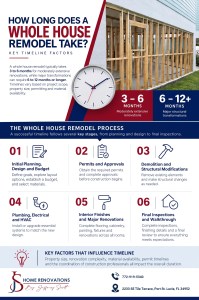
A typical whole home remodeling timeline may range from three to six months for moderately extensive renovations, while major structural transformations can require six to twelve months or longer. These are general planning estimates rather than guaranteed completion dates.
Understanding the Average Whole Home Remodeling Timeline
Every property has unique construction requirements, which means the full house remodel duration can vary considerably. Cosmetic improvements involving flooring, painting, fixtures, and cabinetry generally take less time than renovations requiring structural changes. Projects that include kitchen remodeling, multiple bathroom upgrades, and significant layout modifications demand additional planning and coordination among different construction specialists.
Homeowners should also distinguish between the construction period and the complete renovation process. The overall whole home remodeling timeline includes initial consultations, design development, material selections, permit approvals, construction, and final inspections. Some planning activities can happen simultaneously, but others must follow a specific sequence.
Key Factors That Influence Full House Remodel Duration
The size and condition of a property are among the most important elements affecting how long a whole house remodel takes. Larger homes typically require additional labor, materials, and installation time. Older properties may also reveal outdated electrical systems, plumbing problems, or structural damage once construction begins. Addressing these unexpected conditions can extend the schedule beyond the original estimate.
Another major consideration is the complexity of the renovation design. Moving walls, relocating plumbing fixtures, or introducing new architectural features requires more coordination than replacing existing finishes. Material availability and specialized installation requirements can also affect progress. Selecting products early and confirming delivery schedules helps contractors avoid unnecessary interruptions during critical phases of construction.
Stage One: Initial Planning, Design, and Budget Development
The first of the stages of remodeling an entire house involves defining the homeowner’s vision, establishing priorities, and evaluating existing property conditions. Contractors review the intended renovation scope, identify potential construction challenges, and discuss design preferences. Depending on project complexity, this preliminary phase may take several weeks or longer, particularly when detailed architectural plans are necessary.
Budget development is equally important because financial decisions influence materials, construction methods, and scheduling. A carefully prepared home renovation budget should account for labor, materials, permits, and an appropriate contingency for unexpected conditions. Finalizing major selections before construction begins can reduce delays associated with design changes, product substitutions, and additional purchasing decisions.
Stage Two: Permits, Approvals, and Construction Preparation
Before physical renovations begin, certain projects require permits and inspections from local building authorities. Structural alterations, electrical modifications, plumbing relocation, and home additions may involve specific approval requirements. Depending on the jurisdiction and complexity, permit approval timelines can range from several weeks to longer periods. Proper documentation helps minimize administrative complications that could affect the overall schedule.
Construction preparation also includes ordering materials, coordinating subcontractors, and establishing site access procedures. During this phase, the contractor develops a practical remodeling project schedule that considers which activities must be completed before others can begin. Effective preparation helps prevent scheduling conflicts and ensures that essential materials and construction professionals are available when needed.
Stage Three: Demolition and Structural Modifications
Demolition marks the beginning of visible transformation. Contractors remove outdated flooring, cabinetry, fixtures, and other components identified for replacement. Depending on the renovation scope, interior demolition may take several days to multiple weeks. Proper removal procedures are essential for protecting structural elements and maintaining a safe work environment throughout the property.
Once demolition is complete, structural modifications can begin where necessary. These improvements may include adjusting walls, reinforcing framing, or preparing new openings. Among the stages of remodeling an entire house, structural work can be particularly important because subsequent installations depend on its successful completion. Unexpected discoveries behind existing walls may require additional repairs or professional assessments.
Stage Four: Plumbing, Electrical, and HVAC Improvements
Following structural preparation, contractors coordinate essential mechanical and utility improvements. Plumbing upgrades may involve relocating supply lines, replacing outdated components, or preparing connections for new kitchen and bathroom fixtures. Electrical renovations can include updated wiring, lighting circuits, and additional outlets. These rough-in installations must generally be completed and inspected before walls are closed.
Heating, ventilation, and air conditioning improvements can also influence the full house remodel duration. Replacing equipment, modifying ductwork, or adapting systems to a revised floor plan may require specialized professionals. Coordinating these activities efficiently helps reduce conflicts between trades and supports a smooth transition into insulation, drywall, and interior finishing.
Stage Five: Interior Finishes and Major Room Renovations
After necessary inspections and wall preparation, attention shifts toward visible improvements. Drywall finishing, painting, flooring installation, cabinetry, and trim work gradually bring the renovation design together. This portion of the whole home remodeling timeline often requires careful scheduling because certain materials need adequate installation, drying, or curing time before subsequent activities can begin.
Kitchen remodeling and bathroom remodeling frequently represent significant portions of the construction schedule. Custom cabinetry, countertops, tile installation, and plumbing fixtures require precise coordination. Homeowners planning luxury home renovations may also select specialized finishes or customized features that involve longer production periods. Early decisions and clear communication help keep these installations aligned with the established project schedule.
Stage Six: Final Inspections, Finishing Details, and Walkthrough
As construction approaches completion, contractors address finishing details, verify installation quality, and prepare the property for required final inspections. This phase may involve adjusting doors, completing paint touch-ups, testing fixtures, and reviewing completed improvements. Although these tasks appear relatively minor, final quality inspections remain important for confirming that the renovation meets project expectations.
A homeowner walkthrough provides an opportunity to evaluate the completed work and identify items requiring attention. The contractor may create a final punch list documenting adjustments that need to be completed before project closeout. Allowing sufficient time for this process is an important part of understanding how long a whole house remodel takes from beginning to completion.
How Home Renovations by Jeffrey Scott Helps Streamline Remodeling
Choosing the right contractor can make a meaningful difference in managing renovation expectations. At Home Renovations by Jeffrey Scott we specialize in residential remodeling solutions, including kitchen renovations, bathroom remodeling, flooring installation, home additions, and accessibility improvements. Moreover, we offer customized designs, quality materials, and organized project management.
Serving homeowners throughout Indian River County, Martin County, Vero Beach, Sebastian, Palm City, Hobe Sound and Indian River Shores, we in Home Renovations by Jeffrey Scott emphasizes transparent communication and personalized renovation planning. Our team provides top quality advisory and assistance to help clients evaluate project requirements, discuss construction schedules, and coordinate improvements that support their lifestyles.
Start Your Whole House Remodel with Home Renovations by Jeffrey Scott
Understanding how long does a whole house remodel take begins with evaluating your property’s condition, renovation goals, and project complexity. From the designing stage and permitting management to the actual construction and finishing details, each phase contributes to the final timeline.
If you are planning a complete home transformation, we in Home Renovations by Jeffrey Scott offer personalized renovation solutions designed around your preferences, budget, and property needs. Whether you want to modernize outdated interiors, renovate multiple rooms, or explore custom home improvements, our team can help you move forward confidently.
Contact us to schedule a free consultation and discuss your remodeling project.